The aura around Donald Trump wasn’t built in political rallies alone—it was crafted on sets, stages, and screens long before he entered politics. Now, a former MAGA influencer is pulling back the curtain on how Trump leveraged Hollywood gimmicks to manufacture legitimacy, using spectacle over substance to shape public perception. This isn’t about policy—it’s about performance.
For years, Trump’s brand thrived on visibility, not verification. His rise wasn’t just political; it was theatrical. And as someone once deep inside the MAGA machine explains, the playbook was borrowed straight from entertainment: create drama, control narratives, and cast allies as heroes and enemies as villains—all to sustain an illusion of momentum and inevitability.
The Cult of Celebrity as Political Leverage
Trump didn’t enter politics as a traditional candidate. He entered as a reality TV star with name recognition, a signature phrase, and a flair for confrontation. His celebrity wasn’t incidental—it was the foundation.
The ex-MAGA influencer describes how Trump’s team treated politics like a long-running series, where every tweet, rally, and feud was a “scene” designed for maximum engagement. “We weren’t just promoting a politician,” they said. “We were maintaining a character—‘The Champion of the Forgotten,’ the ‘Anti-Establishment Rebel’—and every move had to reinforce that.”
This character-driven approach relied heavily on tropes familiar to film and television: - The lone warrior fighting a corrupt system - The dramatic comeback arc - The trusted inner circle vs. the traitorous outsider
Real policy positions were secondary. What mattered was the emotional arc—the sense that Trump was always under siege, always fighting, always winning despite the odds.
Example: The 2016 campaign’s “drain the swamp” slogan wasn’t a policy plan. It was a narrative device—clear, emotionally charged, and endlessly repeatable across clips, graphics, and speeches. It didn’t need to be detailed; it needed to be believable within the story.
Staged Moments, Manufactured Legitimacy
One of the most revealing claims from the ex-influencer is how Trump’s team orchestrated moments designed to mimic Hollywood authenticity—scenes that looked spontaneous but were tightly choreographed.
Consider the image of Trump descending the golden escalator at Trump Tower to announce his candidacy. Ostensibly a simple announcement, the moment was saturated with symbolism: the opulent backdrop, the slow descent like a hero entering a battlefield, the wife and daughter by his side. It wasn’t just a speech—it was a set piece.
The influencer noted, “We studied those scenes like film analysts. The lighting, the music, the wardrobe—everything was meant to signal power, luxury, and defiance. It wasn’t accidental. It was branding as drama.”
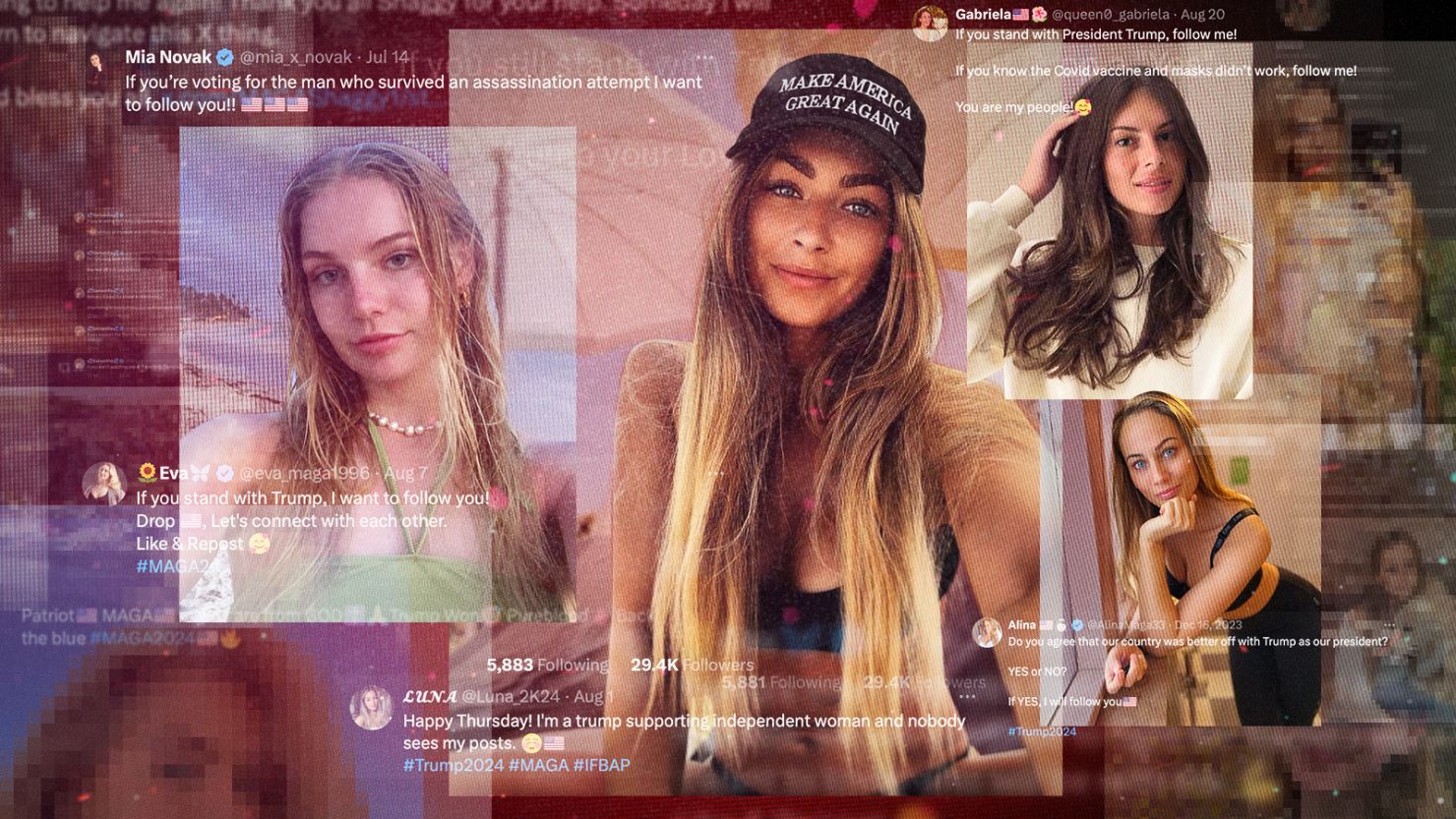
Other staged authenticity moments include: - Rally backdrops: Often designed to resemble campaign headquarters or war rooms, complete with strategy maps and digital tickers—visual cues borrowed from political thrillers. - Celebrity endorsements: Not just for reach, but for proof of cultural dominance. When Kid Rock or Ted Nugent appeared, it wasn’t about their voter base—it was about signaling that Trump had the backing of “real Americans” who rejected Hollywood elites. - Media feuds: Constant battles with journalists weren’t just about control—they were serialized conflict, keeping audiences emotionally invested.
These weren’t isolated tactics. They formed a continuous narrative loop: provoke, react, dominate, repeat.
The Role of Influencers in Amplifying the Myth
As a former MAGA influencer, the source played a direct role in reinforcing Trump’s manufactured image. Their content—videos, posts, live streams—was designed not to inform, but to validate.
“We weren’t journalists. We were storytellers,” they admitted. “Our job was to take the raw material—rallies, tweets, interviews—and repackage it with music, edits, and commentary that made it feel like a movement, not just a campaign.”
This included: - Editing footage to heighten drama (slowed-down entrances, dramatic zooms) - Using soundtrack cues (patriotic music, tense buildups) to manipulate emotional response - Creating “origin myths” for Trump’s policies—stories that gave them emotional weight, even if factually thin
One example cited was the portrayal of the U.S.-Mexico border. Raw footage of border facilities was often overlaid with ominous music and narration framing it as an “invasion.” The visuals weren’t new, but the treatment made them feel urgent, cinematic, and dangerous.
This strategy mirrored reality TV editing—where conflict is emphasized, timelines compressed, and resolutions delayed for suspense.
Hollywood Techniques, Political Application
Trump’s use of entertainment tactics wasn’t accidental. His career in media—The Apprentice, cameo appearances, tabloid coverage—gave him an intuitive grasp of what audiences respond to.
The ex-influencer highlighted several Hollywood techniques now embedded in Trump’s political brand:
#### 1. The Hero’s Journey Framework Trump’s narrative follows the classic arc: ordinary world (pre-2015), call to adventure (entering race), trials (media attacks, political resistance), climax (election, impeachment), and return (2024 comeback). Each phase was reinforced through messaging, visuals, and influencer content.
#### 2. Cultivation of a Visual Identity Like any major character, Trump developed a recognizable look: red tie, jacket slightly open, hand gestures. These weren’t fashion choices—they were branding. The ex-influencer noted that even minor deviations (like wearing a blue tie) were discouraged because they disrupted audience recognition.
#### 3. Use of Montage and Repetition Political ads and social clips often used rapid-fire montages of crowds, flags, and opponents—similar to movie trailers. Repetition of phrases (“Crooked Hillary,” “Witch Hunt”) acted like leitmotifs, reinforcing themes across platforms.
#### 4. Casting of Allies and Villains Just like in film, figures were simplified into archetypes: - Villains: The “deep state,” “fake news,” Never-Trump Republicans - Heroes: Base supporters, loyal surrogates, conservative celebrities - Redeemable characters: Republicans who switched sides, portrayed as “awakening”
This black-and-white framing made the narrative easier to follow and emotionally satisfying.
The Cost of Spectacle Over Substance
While the Hollywood approach built visibility and loyalty, it came at a cost—particularly in credibility and policy depth.
The ex-influencer admitted that internal discussions often prioritized optics over outcomes. “We’d get memos asking, ‘How does this look on TikTok?’ not ‘Will this help voters?’” they said. “If a policy idea didn’t have a dramatic hook, it got buried.”
Examples include: - The border wall: a powerful visual symbol, but with little discussion on feasibility or funding - The “bigly” tax plan: promoted with sweeping claims, but rarely broken down in accessible terms - Executive actions: often announced with fanfare, but quietly modified or blocked later
This focus on image created a disconnect. Supporters felt energized, but many were unclear on actual governance plans. The movement thrived on momentum, not mechanics.
Moreover, the reliance on conflict meant that compromise was framed as betrayal. In a Hollywood narrative, heroes don’t negotiate with villains—they defeat them. This made bipartisan efforts nearly impossible and entrenched polarization.
Why This Matters Beyond Trump
The fusion of Hollywood tactics with political campaigning isn’t unique to Trump—but he perfected it at scale. The ex-influencer’s revelations underscore a broader shift: modern politics is increasingly indistinguishable from entertainment.
Other politicians have tried to replicate the style—using viral clips, influencer partnerships, and dramatic entrances—but few match Trump’s instinct for spectacle. The danger lies not in showmanship itself, but in its ability to replace substance.
When legitimacy is derived from visibility rather than policy, governance suffers. When loyalty is tied to narrative consistency rather than accountability, democracy weakens.
We now live in an era where political success is measured not just by votes, but by views, shares, and sentiment. And in that landscape, the line between leader and character blurs.
A Final Word: Recognizing the Performance
Understanding Trump’s use of Hollywood gimmicks isn’t about dismissing his support—it’s about seeing the machinery behind the message. The ex-MAGA influencer didn’t leave because they disagreed with every policy. They left because they saw how carefully the image was constructed, and how little it reflected reality.
For voters, media, and future candidates, the lesson is clear: not every dramatic moment is meaningful. Not every viral clip is truthful. And legitimacy shouldn’t be manufactured—it should be earned.
If we’re to rebuild trust in leadership, we must learn to separate performance from policy, spectacle from substance. That starts with recognizing the tricks of the trade—and demanding more than just a good show.
FAQ
How did Trump use Hollywood techniques in his campaigns? He applied storytelling structures, visual branding, and dramatic staging—like movie trailers, hero narratives, and villain framing—to shape public perception.
Who is the ex-MAGA influencer revealing these tactics? The source remains anonymous to protect their identity, but they were a content creator within the MAGA movement with direct access to messaging strategy.
Were Trump’s rallies really scripted? While speeches had improvisational elements, key moments—entrances, backdrops, guest appearances—were carefully planned for maximum media impact.
Did celebrity endorsements actually help Trump politically? They weren’t about votes—they reinforced the narrative that Trump had cultural legitimacy and broad support beyond traditional politics.
Can other politicians use these tactics successfully? Some have tried, but Trump’s background in entertainment gave him a unique edge in timing, branding, and audience manipulation.
Is using showmanship in politics unethical? Showmanship isn’t inherently wrong, but it becomes problematic when it replaces transparency, distorts facts, or manufactures false legitimacy.
What should voters look for to spot political performance? Watch for repeated dramatic tropes, lack of policy detail, staged “authentic” moments, and emotional manipulation through music or editing.
FAQ
What should you look for in Ex-MAGA Influencer Exposes Trump’s Hollywood Image Tactics? Focus on relevance, practical value, and how well the solution matches real user intent.
Is Ex-MAGA Influencer Exposes Trump’s Hollywood Image Tactics suitable for beginners? That depends on the workflow, but a clear step-by-step approach usually makes it easier to start.
How do you compare options around Ex-MAGA Influencer Exposes Trump’s Hollywood Image Tactics? Compare features, trust signals, limitations, pricing, and ease of implementation.
What mistakes should you avoid? Avoid generic choices, weak validation, and decisions based only on marketing claims.
What is the next best step? Shortlist the most relevant options, validate them quickly, and refine from real-world results.